Protect & Preserve
Defend an independent, merit-based civil service and resist political interference that weakens fair hiring and neutral administration.
We are an independent, nonpartisan organization dedicated to protecting a merit-based federal civil service through research, public education, and accountable governance.
Merit Service Advocates
Independent advocacy organization

About
The strength of our democracy rests on the principle that government should serve the people, not political interests. Merit Service Advocates exists to protect, promote, and preserve that principle so the public can rely on a professional, independent civil service that serves with integrity.
We believe in a federal workforce where public servants are hired for qualifications, protected from political interference, and empowered to carry out their duties with professionalism and care. When this system is undermined, everyday Americans pay the price through lost services, eroded trust, and threats to national security and collective wellbeing.
We also partner with good-government groups to help design high-performing, merit-based workforces suited to modern governance, because strong civil service is an American issue that rises above politics.
We advance this mission through Four Pillars that define our work and guide our public-interest resources.
The Four Pillars
Building on our mission, these four pillars guide how we protect an independent, merit-based civil service with clarity, accountability, and public trust.
Defend an independent, merit-based civil service and resist political interference that weakens fair hiring and neutral administration.
Track and explain threats to the civil service, including a retreat toward a spoils system, and show how interference affects everyday lives.
Provide clear, accessible information on employment protections, due process, and legal safeguards that keep the civil service independent and accountable.
Champion public service as a meaningful calling and encourage civic-minded people to serve their country through government work.
SERIES
In June 2026, the Supreme Court’s decision in Trump v. Slaughter made clear that the independence of institutions like the Merit Systems Protection Board can no longer be assumed. Merit Service Advocates is responding with A Call to Restore Trust, a four-part package of coordinated reforms addressing how the civil service is protected, how it hires, and how it resolves disputes.
The package begins with a unified proposal that connects all three reforms to a single argument, and closes with a call for Congress to convene a structured, bipartisan review modeled on the process that produced the Civil Service Reform Act of 1978.
Each paper below sets out a proposal in full. The deep dive articles that follow make the case for each one — connecting the reform to the events driving it, answering the questions readers raise most often, and laying out the reasoning behind the fix in a shorter, more accessible read.
Four accessible, print-ready PDFs with full implementation details, plus a detailed Explainer on the proposed Civil Service Court's structure and appointment model.
Institutional redesign resource
A one-page look at how A Call to Restore Trust separates adjudication, administration, and oversight into three distinct institutions: the U.S. Civil Service Court, the Office of Personnel Management, and the Civil Service Review Commission.
View Full GraphicFeatured Commentary
Rethinking the public–private divide in the debate over federal workforce reform
By Raymond A. Limon | Policy Commentary | August 2026
A specific theory of government reform has taken hold in Washington: that public administration is fundamentally a systems problem, and that government's failures can be debugged the way software is. This paper makes the case that the civil service is not a platform to be optimized — it is an institution built on a different bargain than the private sector, and understanding that difference is essential to reforming it well.
Founder
Raymond A. Limon (Ray) is the Founder of Merit Service Advocates, LLC and a nationally recognized leader in federal merit system law, civil service reform, and strategic human capital management. Through Merit Service Advocates, he provides pro bono advocacy and strategic counsel to Congress, national unions, law firms, universities, and good-government organizations dedicated to protecting an independent, merit-based civil service.
From March 2022 to March 2025, Ray served as Vice Chairman and Acting Chairman of the U.S. Merit Systems Protection Board (MSPB), helping restore the Board’s quorum after a nearly five-year vacancy. During his tenure, he authored and joined precedential decisions involving whistleblower retaliation, adverse actions, and prohibited personnel practices, while leading an in-house legal team that adjudicated more than 4,700 appeals and eliminated an inherited backlog of more than 3,600 cases ahead of schedule.
Before joining MSPB, Ray served as Chief Human Capital Officer for the U.S. Department of the Interior, where he led workforce strategy, compliance, and human capital operations for more than 70,000 employees across ten bureaus, more than 350 occupations, and over 2,400 locations worldwide.
While serving as Interior’s CHCO, he also co-led the governmentwide effort to modernize the Chief Human Capital Officers (CHCO) Council Charter. Approved by the Office of Personnel Management in 2021, it represented the first comprehensive update to the Charter since 2003 and strengthened the Council’s governance, clarified leadership responsibilities, and reinforced its role as the federal government’s principal strategic forum for human capital leadership.
Ray’s federal career spans more than three decades and includes senior leadership positions at the Office of Personnel Management, AmeriCorps (Corporation for National and Community Service), the U.S. Department of State, and the Department of the Interior.
Throughout his career, he has helped strengthen federal institutions by improving merit system oversight, advancing governmentwide human capital policy, and promoting practical, nonpartisan civil service reforms that enhance accountability while preserving merit principles.
Ray regularly advises on significant federal workforce issues and has participated as amicus curiae in cases before the U.S. Supreme Court and the U.S. Courts of Appeals for the Ninth and D.C. Circuits. National media regularly seek his perspective on civil service and federal workforce matters.
In 2023, Ray received the inaugural Lifetime Service Award presented by the Office of Personnel Management and the Chief Human Capital Officers Council in recognition of his longstanding contributions to federal human capital leadership and public service.
Ray earned his J.D. from the Indiana University Maurer School of Law and is admitted to practice in the District of Columbia and Maryland. He is a Peace Corps alumnus who served in Honduras, a frequent speaker on public service, federal employment law, and civil service reform, and remains committed to mentoring the next generation of public servants while advancing thoughtful, evidence-based reforms that strengthen the American civil service.
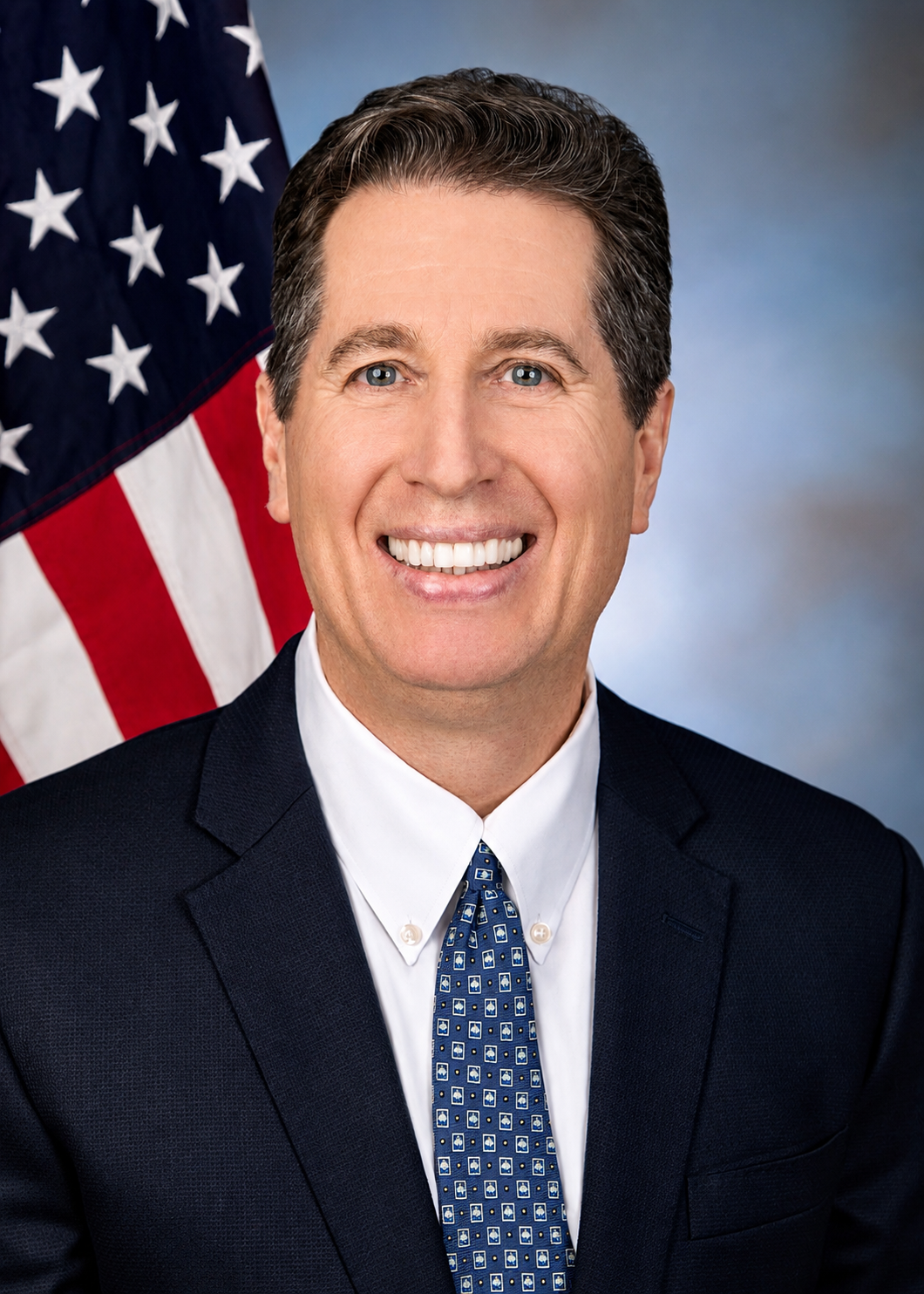
Founder
Founder, Merit Service Advocates, LLC.
For interview coordination and speaking engagements, please visit the Media and Speaker Invitations section.
Resource Hub
Federal employees facing a Reduction in Force deserve clear, practical guidance — not just legal jargon. MSA's RIF Practice Guide walks you through the complete appeal process in one place: the legal standards you need to know, the defenses available to you, and the evidentiary work that determines whether you win. All resources are for informational purposes only and do not constitute legal advice.
Representing Yourself in an MSPB Reduction-in-Force Appeal
A RIF can end a federal career without any allegation of misconduct or poor performance — and many employees assume there is nothing to appeal. There often is. This Practice Guide gives you the tools to find out.
Written for federal employees representing themselves before the Merit Systems Protection Board, and for the attorneys and advocates who assist them, the Guide covers:
Rights without records don't win cases. The work you do before you have a case is often the difference between an argument you can prove and one you cannot. Start here.
An OPM Crosswalk on Process, Appeals & Accountability
Major RIF rules changed effective September 2, 2026, and the forum, burden of proof, discovery, and hearings now work differently than under the prior MSPB process. This crosswalk maps the full before-and-after, explains what OPM's final rules changed in how a RIF is conducted and appealed, and shows what those changes mean for accountability.
This resource complements the Practice Guide rather than replacing it. The Guide remains controlling for RIF notices issued before September 2, 2026 and for Foreign Service career and career-candidate RIF appeals, which remain with MSPB by statute regardless of notice date.
What's inside
Featured Resource
Last updated September 2026
The Tracker is the flagship resource of MSA's Federal Workforce Accountability Project. It monitors legal, policy, and institutional developments that shape merit system protections, due process rights, workforce independence, and the long-term capacity of federal public institutions. It helps journalists, advocates, federal employees, researchers, and other readers follow fast-moving executive actions, agency decisions, and litigation that are actively defining the future of the federal civil service.
Other well-resourced organizations maintain litigation databases tracking legal challenges to executive actions across a broad range of policy areas. We consult them and respect their work.
The MSA Tracker serves a different purpose.
Those trackers document that cases are filed. The MSA Tracker explains what is at stake — for a career employee, a union representative, or a labor attorney advising clients today.
We map the full arc of each federal workforce action: from the Executive Order or OPM directive, through the rulemaking record, into the courts, and up through the Merit Systems Protection Board, the Federal Circuit, and the Supreme Court. The Civil Service Reform Act and merit system principles are the constant analytical frame throughout.
We publish independently because that independence is the point. The MSA Tracker is not a subset of another organization's database. It reflects original research, practitioner-level legal analysis, and editorial judgments about what matters for merit system accountability — by people who have worked inside these systems.
Federal legal talent is steadily exiting public service, leaving fewer defenders of a merit‑based civil service at the moment independent oversight is most needed.
Merit Service Advocates is advancing a national proposal to build a new law school clinic or expand an existing one that equips law students and faculty to defend a professional, nonpartisan federal civil service. The initiative responds to a growing need for independent legal capacity to challenge politicization, protect merit-based hiring, and uphold the rule of law.
The proposal recommends a coordinated model across law schools, public-interest programs, and clinical partners. It outlines how a shared research agenda, rapid-response litigation support, and practical training can strengthen accountability while creating a durable pipeline of public-service advocates.
The urgency has only grown. A New York Times analysis published May 31, 2026 confirmed that more than 10,000 federal attorneys — roughly one in five of the entire federal legal workforce — have departed government service since January 2025. Six agencies have lost more than a quarter of their legal staff. Law students are actively steering away from federal service. The pipeline rupture is real, and it is compounding. The law schools that begin training students today will produce the practitioners who lead the rebuilding.
Four practical outcomes are central to the clinic plan:
Live case experience
Students gain hands-on MSPB, OSC, and federal court experience through supervised clinic work.
Meaningful representation
Federal employees who cannot afford counsel gain access to focused, mission-driven legal support.
Institutional distinction
Law schools earn a first‑in‑the‑nation identity in a growing field of public‑service advocacy.
Future talent pipeline
Clinic graduates help rebuild federal legal capacity and strengthen the future talent pipeline.
Accessible, print‑ready PDF with full implementation details.
Media
Merit Service Advocates welcomes media inquiries, interview requests, speaking invitations, and opportunities to contribute expert commentary on the federal civil service, merit system protections, public service leadership, and workforce accountability.
Raymond A. Limon is available for interviews, panels, academic discussions, and public conversations related to civil service reform, federal workforce law, public administration, and the role of independent institutions in democratic governance.
For all requests, please use the direct contact options below. Email is preferred for scheduling and response coordination.
Next steps
Direct requests to the Contact section for the fastest response.
Contact
This is also the right place for media inquiries and speaking invitations.
For all inquiries, please use the direct channels listed. Email is the fastest way to reach our team, and we respond within two business days.
Direct contact
Use the public email for requests and the LinkedIn profile for professional connection.